The outbreak has mainly affected the gold-mining towns of Mongwalu and Rwampara, where health teams are now racing to stop the virus from spreading further. Officials are also investigating additional suspected cases in Bunia, the provincial capital.
The Africa Centres for Disease Control and Prevention (Africa CDC) said emergency meetings were being organised with DR Congo, Uganda, South Sudan and international health partners to strengthen response efforts and improve cross-border monitoring.
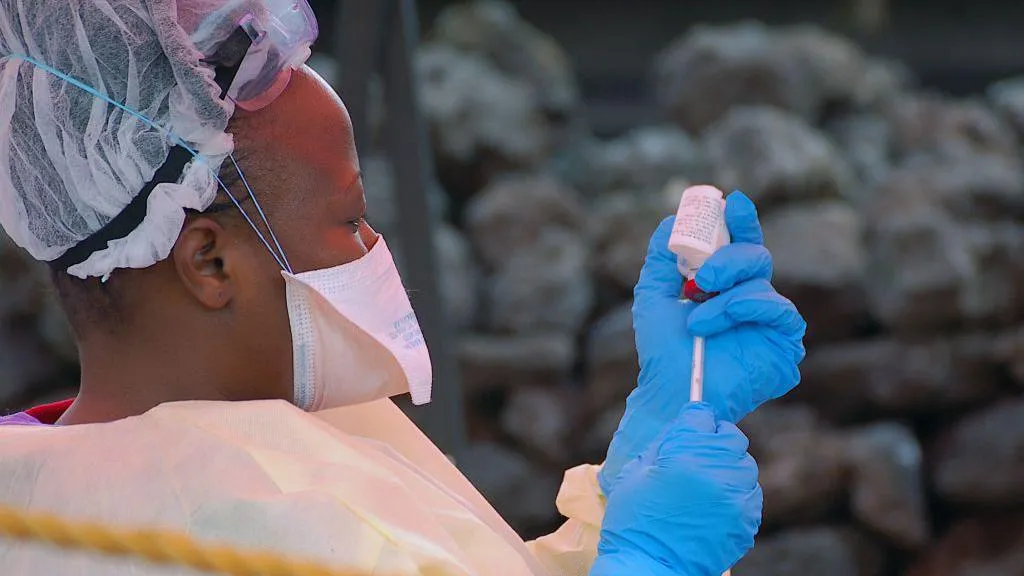
Ebola is one of the world’s deadliest viral diseases. It spreads through direct contact with infected bodily fluids and broken skin, often causing severe bleeding, organ failure and death.
According to the World Health Organisation, Ebola kills about half of the people infected. Early signs include fever, fatigue, headache, sore throat and muscle pain before developing into vomiting, diarrhoea, skin rash and bleeding.
Laboratory tests carried out at the Institut National de Recherche Biomédicale in Kinshasa confirmed the presence of the Ebola virus in 13 out of 20 samples examined. Scientists are still carrying out further tests to identify the exact strain behind the outbreak.
Health officials are particularly concerned about the movement of miners, traders and travellers between affected communities and neighbouring countries. The urban nature of Bunia and Rwampara, combined with busy mining activities in Mongwalu, has made disease control more difficult.
Africa CDC Director-General Dr Jean Kaseya said regional cooperation was now critical because of the “significant population movement” across borders.
Communities in affected areas have been advised to follow instructions from health authorities, avoid direct contact with suspected patients and report symptoms immediately.
Although the Congolese government had not officially declared the outbreak by Friday afternoon, authorities were expected to address the nation during a press briefing later in the day.
Ituri province has faced years of insecurity caused by armed rebel groups operating in the region. Since 2021, the area has been under military administration as the government battles militias, including the Allied Democratic Forces (ADF), a group linked to the Islamic State.
Ebola was first discovered in DR Congo in 1976 and is believed to have originated from bats. This marks the country’s 17th Ebola outbreak.
Over the past five decades, the virus has killed around 15,000 people across Africa. DR Congo’s deadliest outbreak happened between 2018 and 2020, when nearly 2,300 people lost their lives.
Last year, another outbreak in Kasai province claimed 45 lives.