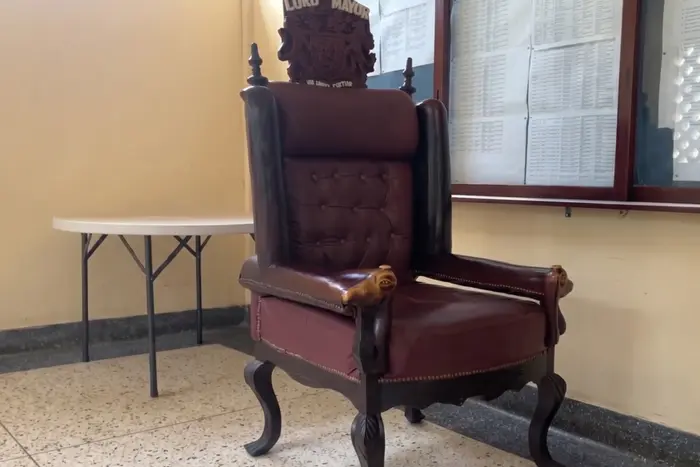
The ornate wooden chair, decorated with deep burgundy tufted leather and detailed carvings, has long been a symbol of authority at City Hall. It carries the inscription “VIS UNITA FORTIOR” and was used for 15 years by former Lord Mayor Erias Lukwago, alongside several leaders before him.
Balimwezo reportedly asked the Kampala Capital City Authority to procure a new chair, saying the current one is too old for his administration.
His decision immediately sparked debate among Ugandans, especially on social media, where many questioned why such a historic item should be replaced instead of preserved.
Some critics described the move as unnecessary and disrespectful to tradition. Others argued that historic office items should be treated as national treasures rather than discarded.
One X user, @atwookijohn, commented:
“Wondering who bewitched politicians. Balimwezo please buy your own. In Europe such a chair of such age is a treasure. ”
Another user, @Janabs16, suggested the chair could remain while the office itself is spiritually renewed.
“Rather than replacing the chair, he could simply dedicate and recommit the office to integrity, service and faith while preserving its history and symbolic value,” the user wrote.
The discussion also spread to Facebook, where users compared the chair to other long-standing symbols of office that remain in use, including the Lord Mayor’s ceremonial golden chain.
However, some residents defended Balimwezo’s decision, saying every new leader has a right to introduce personal changes and begin their term with fresh symbols. Supporters also pointed to precedents where senior leaders declined to use offices or items associated with their predecessors.
Political observers say the controversy may influence early public opinion about Balimwezo’s leadership style and priorities. Critics argue that Kampala residents are more concerned about poor roads, flooding, garbage collection, corruption and traffic congestion than office furniture.
Supporters, on the other hand, believe the decision reflects a desire to modernise the office and mark the beginning of a new administration.
As debate continues, the historic chair remains more than just a piece of furniture. For many Kampala residents, it represents the city’s political history, leadership legacy and the traditions that connect past and present administrations.