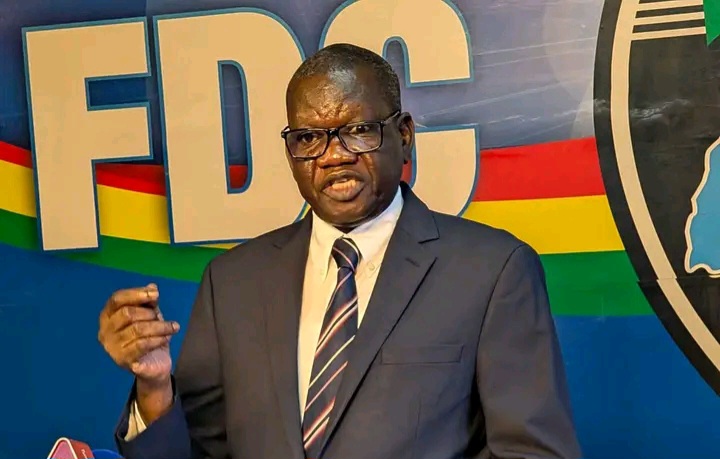
Patrick Oboi Amuriat, president of the Forum for Democratic Change (FDC), has called on government to urgently compensate street vendors who lost goods and income during recent eviction operations, arguing that authorities must take responsibility for the damage caused.
Speaking to journalists in Kampala, Amuriat questioned the fairness of the enforcement exercise, noting that many of the affected vendors had been operating with the awareness and in some cases approval of the Kampala Capital City Authority (KCCA).
“There are people who paid revenue to the authorities, and now the same authorities are going after them,” he said, raising concerns about consistency and accountability in government actions.
His remarks come at a time when frustration is growing among small-scale traders, many of whom say they were left with no warning and no alternative source of income. For these vendors, the question is simple: if the state allowed them to operate before, why punish them now without a clear plan?
Amuriat urged Parliament to step in and investigate the enforcement process, warning that it reflects a broader pattern of rushed policy decisions
“The government has perfected a dangerous pattern — implement first, consult later, apologise never,” he said
He stressed that street vending should not be treated as a crime, especially in a country where many depend on informal trade to survive
Excluding low-income earners from city spaces, he argued, risks deepening inequality rather than solving urban challenges
Calling for immediate action, Amuriat demanded a halt to further evictions until a clear and credible relocation plan is put in place—one that involves vendors in decision-making and ensures fair treatment
The pressure appears to be having an effect. Last week, government announced a suspension of the controversial trade order following public outcry and concerns raised by lawmakers
State Minister for Trade, Industry and Cooperatives, David Bahati, said the pause is meant to allow consultations and create a more organised transition of traders into formal markets
“The enforcement of the trade order is hereby suspended until we can harmonise our approach with all stakeholders and ensure that every displaced vendor has a designated place to go,” Bahati said
Behind the scenes, discussions are already underway
A consultative meeting at the Ministry of Local Government, led by Permanent Secretary Ben Kumumanya, brought together leaders of the Federation of Uganda Traders Association (FUTA), including its head John Kabanda, to find what officials described as a more “humane” solution
Yet challenges remain. While KCCA reports that the number of licensed traders has grown significantly from 12,536 to over 20,000 many still lack access to proper stalls. Parliament has also flagged delays in market construction, with only three out of the planned 12 markets completed despite billions allocated for the current financial year
For now, the suspension offers temporary relief. But the bigger issue remains unresolved: how to balance order in the city with the survival of those who depend on it.
As pressure mounts, the demand is becoming clearer not just enforcement, but fairness, planning, and accountability