Early Saturday, Iranian and American forces raced to recover crew members from the first US fighter jet shot down inside Iran since the war began.
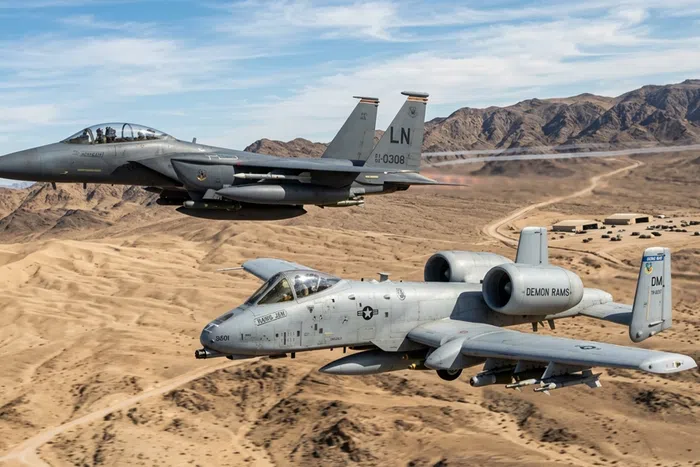
Tehran confirmed it had destroyed an F-15 warplane, while US media reported that American special forces had rescued one of the two crew members.
The second crew member remains missing.
Iran’s military also claimed it had downed a US A-10 ground attack aircraft over the Gulf, with reports suggesting the pilot was rescued.
The conflict began over a month ago with US-Israeli strikes that killed Iran’s supreme leader, Ali Khamenei, prompting retaliatory attacks that have now spread across the Middle East, disrupting the global economy and affecting millions worldwide.
A spokesperson for Iran’s central military command said, "An American hostile fighter jet in central Iranian airspace was struck and destroyed by the IRGC Aerospace Force’s advanced air defence system.
The jet was completely obliterated, and further searches are ongoing.
" Iranian television reported that anyone who captures a US crew member alive could “receive a valuable reward.
”
Meanwhile, the US military confirmed multiple aircraft losses in the region, including a tanker crash in Iraq and three F-15s accidentally shot down by Kuwaiti forces.
Retired US Brigadier General Houston Cantwell explained that the priority for downed pilots is to remain hidden and find a way to communicate for rescue.
Fresh attacks have struck Israel, Iran, Lebanon, and Gulf countries.
Large explosions were reported in northern Tehran, while Israel launched waves of strikes in Tehran and Beirut.
AFP journalists observed damage near a bridge west of Tehran, where residential buildings had blown-out windows but no military sites were nearby.
Local authorities reported 13 civilians killed and dozens injured.
In Lebanon, Israel struck over 3,500 targets since fighting with Iran-backed Hezbollah began and destroyed a bridge in the Bekaa region to prevent the movement of reinforcements and military equipment.
Lebanon’s health ministry reported 1,345 deaths and over 4,000 injuries since the war started.
Iran has blocked the Strait of Hormuz, a key global shipping route, since the conflict began.
Normally, one-fifth of the world’s oil and gas passes through this waterway.
Most ships now crossing have ties to Iran, with 60% carrying commodities to or from the country.
Iranian military spokesperson Ebrahim Zolfaghari warned of further attacks on regional energy sites in response to US threats.
Recent incidents include a drone attack on a Kuwaiti oil refinery, Iranian strikes on a UAE gas and power complex, and injuries in Bahrain from intercepted drones.
Former Iranian Foreign Minister Mohammad Javad Zarif urged Tehran to negotiate with Washington, suggesting Iran could limit its nuclear program and reopen the Strait of Hormuz in exchange for sanctions relief, potentially ending the war and reducing regional tension.
As the conflict intensifies, the world watches closely, aware that the stakes go far beyond the battlefield, threatening global energy supplies and security.
.